Ask Julie
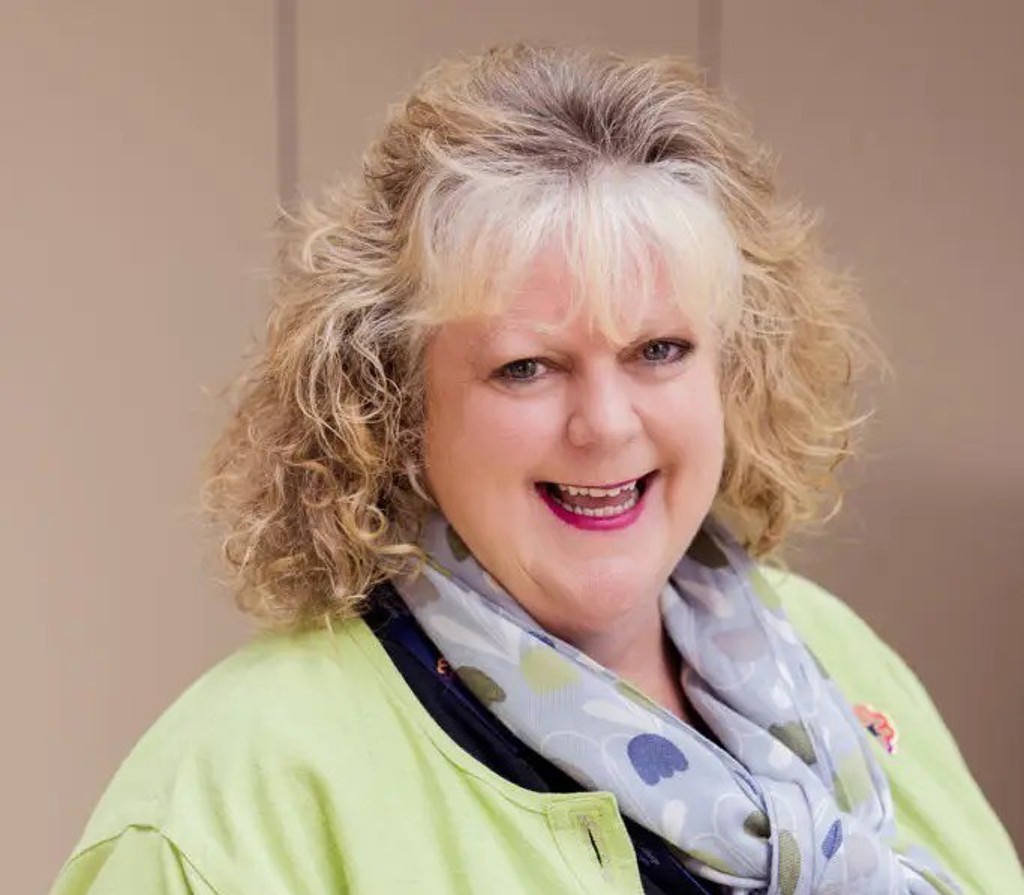
Julie Richards is the Director of the Royal College of Midwives (RCM) in Wales. She grew up in Montgomery but now lives in Llandrindod Wells.
In an awards ceremony held by Learn Welsh Ceredigion, Powys, Carmarthenshire – one of the providers of the National Centre for Learning Welsh - at the 2026 National Eisteddfod, Julie received the '2025/26 Health and Social Care Learner' award.
A new partnership between the National Centre for Learning Welsh and the Royal College of Midwives was launched at the National Eisteddfod this year. The partnership will enable midwives across Wales to develop their Welsh language skills, helping them to support women and their families while receiving care.
We spoke with Julie to learn more about her Welsh-language journey…
What inspired you to start learning Welsh?
I’ve been working in and with the NHS for over 35 years, and in my role at the RCM, I represent the voice of midwives and maternity support workers across Wales. I promote midwives’ contributions to safe, high-quality care, which is key to the future health of Wales.
I wanted to amplify the voices of our Welsh-speaking members and raise awareness of the importance of personalised maternity care for women and their families, including the active offer of the Welsh language in maternity and neonatal services. I felt I could be a role model by starting and sharing my own Welsh-language learning journey.
Where are you learning Welsh?
It has been a two-year journey so far. I began with the National Centre for Learning Welsh’s free Learn Welsh modules for the Health and Social Care sector. I then undertook a 12-week Sylfaen/Foundation course, which provided weekly practise. I’ve also had 1:1 confidence-building sessions. I’m now able to use my Welsh for conference and meeting presentations, which has been really helpful and practical.
How do you practise your Welsh outside the classroom?
I aim to use some Welsh every day, during meetings or out in clinical services. I read as much Welsh as I can on social media and learn everyday phrases. I have also taken advantage of opportunities in my community to practise everyday conversations, including with my local Young Farmers’ Club and at the Royal Welsh Show.
Congratulations on winning the ‘Dysgwr Iechyd a Gofal Cymdeithasol’ (Health and Social Care Learner) award. How did it feel to receive this award at the National Eisteddfod?
Spending time at the Eisteddfod was so special, as the RCM was launching a new partnership with the National Centre for Learning Welsh, developing resources tailored specifically for midwives to help them learn basic but important words and phrases to use in the workplace.
To receive the award felt like two years of hard work had all come together. It was special to share the event with TUC Cymru, who have been so helpful in promoting the importance of the Welsh language in the workplace.
Learning Welsh – what’s next for you?
To keep using my Welsh at key RCM events and build my confidence to use Welsh during Senedd work engagements. I’d also like to see RCM members taking advantage of the Learn Welsh resources that have been specifically developed for them. Since sharing my Welsh-language learning journey, so many people have asked where and how they can start learning, too.
What would you say to someone thinking about learning Welsh?
Take advantage of the learning support from Dysgu Cymraeg/Learn Welsh, use the learning modules available and seek any opportunity to build your confidence.