Local voices of Eisteddfod y Garreg Las: Meet Anne May
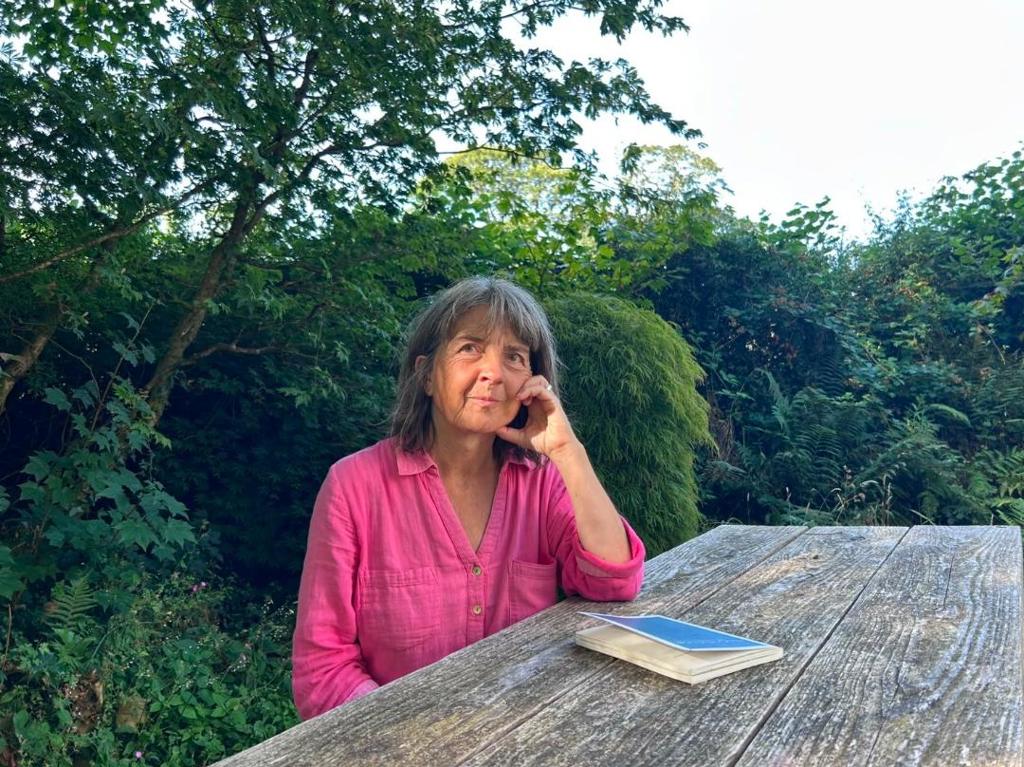
With the Eisteddfod y Garreg Las on the horizon, we caught up with Anne May, who reconnected with the Welsh language 15 years ago after moving to Pembrokeshire.
Anne enjoys creative writing, contributes articles to local Welsh-language community newspapers and takes part in reading clubs.
Here, we chat with Anne about the Eisteddfod and the local area…
What’s the best thing about learning Welsh?
I love reading Welsh novels, but I must admit that reading a novel in a second language isn’t easy. Many years ago, I bought several books for young people. I would underline each unfamiliar word with a pencil, look it up in the dictionary and scribble the meaning of the word in the margins. Once I had finished each page, I would re-read it with my notes until it flowed naturally. The process was very slow, but as a result, my Welsh vocabulary has grown enormously. Dyfal donc a dyrr y garreg! (perseverance pays).
The 'Amdani' series is perfect for adults who are learning Welsh. The books have contemporary narratives and the vocabulary provided at the bottom of each page makes them easier to read.
Where’s your favourite place in Pembrokeshire?
One kilometre west of St David's Peninsula lies Ynys Dewi. The island was named after Saint David, who lived in the sixth century. A long time ago, Ynys Dewi was once an important place of pilgrimage. Over thousands of years, prevailing winds and waves have carved deep caves around the island. In these caves, over 500 seal pups are born every year between September and December.
There are other well-known islands in Pembrokeshire, including Skomer Island, which is famous for its puffins, and Grassholm Island, known for its white cormorants and its connection with the Mabinogi. But without a doubt, Ynys Dewi is my favourite! In 1992, I had the opportunity to work on Ynys Dewi for a year as part of a research team studying Atlantic grey seals. It was an unforgettable experience.
What advice would you give to learners visiting the Eisteddfod?
Visiting the Eisteddfod is like being in a sweet shop – there’s something for everyone: art, drama, literature, music, exhibitions and stalls. Although Maes D is a dedicated space for Welsh learners, don't be afraid to wander around the maes. More information can be found on the Eisteddfod website: About | Eisteddfod
If you’re feeling a little nervous about using your Welsh, remember that translation services will be available free of charge.
Would you like to volunteer? All volunteers receive a free entry ticket to the Eisteddfod on the day(s) they volunteer.
What’s your favourite word from the local Welsh dialect?
Danto - fed up
Jengyd - to escape
Mowr - big (a local pronunciation that emphasises the ‘o’ sound instead of ‘a’)
Whompyn/whompen - something of considerable size