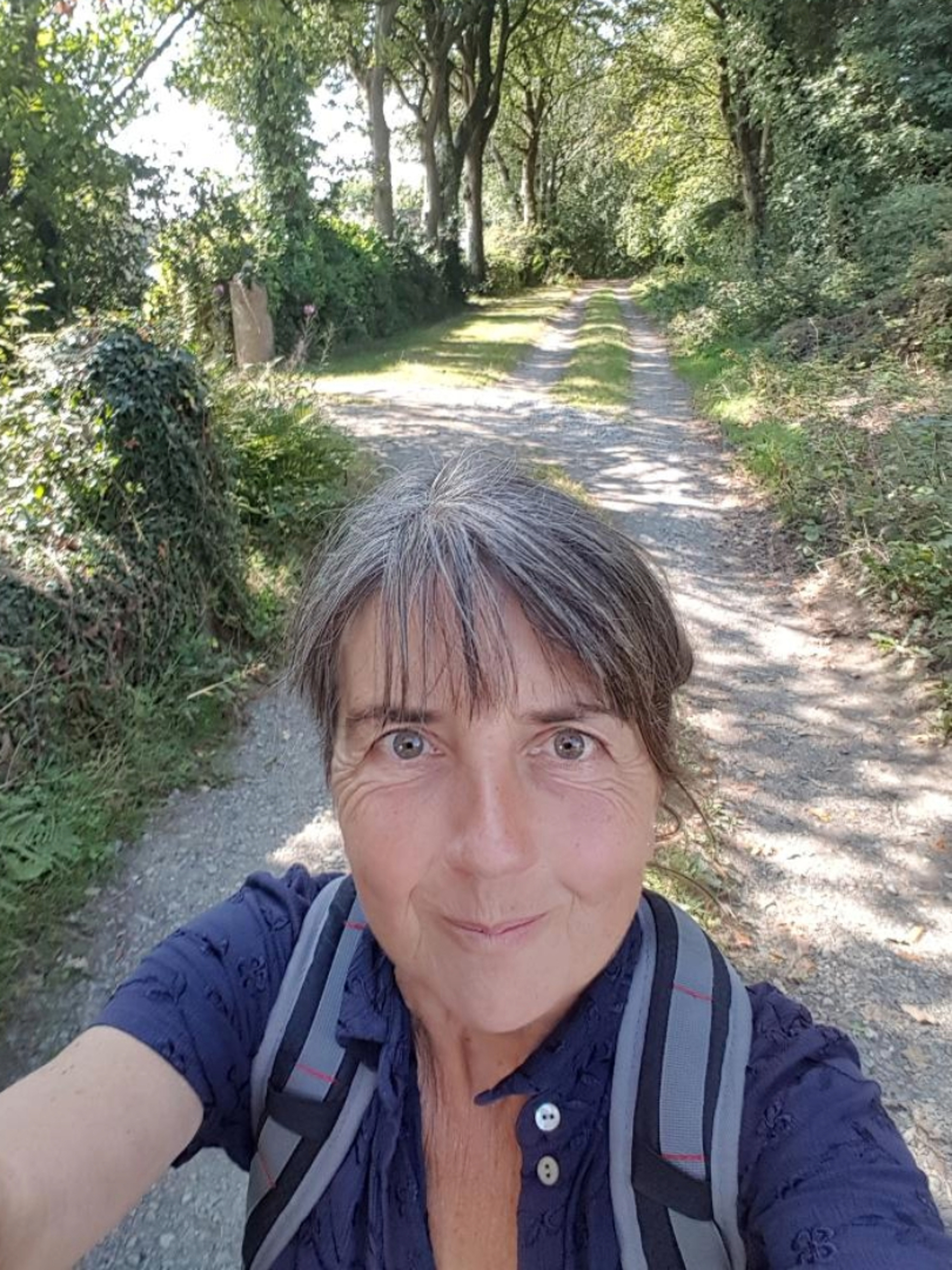
Since reconnecting with the Welsh language 15 years ago, Anne May has embraced opportunities to write creatively – contributing articles to Welsh-language magazine, Barn, local community papers, and competing in local Eisteddfods.
Originally from New Quay and now living in Pembrokeshire, Anne loves to read and write. She first contributed to Barn magazine through its ‘Lleisiau Newydd’ (New Voices) scheme, where she was mentored by poet and writer, Elinor Wyn Reynolds. She has since written reviews of two books from the Amdani series for Welsh learners – Dail Te by Mared Lewis, and Strimio by Bethan Gwanas.
In addition, she has contributed articles to local Welsh-language community papers, including Y Dwrgi and Cwlwm, and has won prizes at local Eisteddfods, including winning at this year’s Lampeter Eisteddfod for her piece 'Dysgu Cymraeg'.
Anne is an active member of a reading club for Welsh learners and enjoys reading and discussing all kinds of Welsh-language books – from contemporary works to the classics.
Anne works as an Engagement Officer for the Tywi Gateway Trust, a charity established in 2016 to restore and protect the Bishop's Park in Abergwili, and she enjoys using her Welsh every day at work.
Brought up in a non-Welsh speaking household, Anne learned Welsh as a second language at school but later lost the confidence to use it. She decided to reconnect with the language 15 years ago when she moved to live in Pembrokeshire. She is now following a Proficiency-level course with Learn Welsh Gwent, which is run by Coleg Gwent on behalf of the National Centre for Learning Welsh.
We spoke to Anne about books, poems and where she finds her inspiration to write...
What’s your favourite Welsh-language book, and why?
Martha, Jac a Sianco by Caryl Lewis. Caryl wrote this novel in her early twenties, and I think her portrayal of the west Wales countryside is beautifully crafted. Although the atmosphere of the story is dark, it also has moments of humour.
What’s your favourite Welsh poem, and why?
Diwrnod i’r Brenin by T James Jones (Jim Parc Nest). A sad but very beautiful poem written in west Wales dialect.
Which writers or poets have influenced you?
The poems and dialect of Idris Reynolds are close to my heart, especially Y Cei, which highlights the strong influence New Quay had on Dylan Thomas’s poetry.
At the moment, I'm enjoying poems by the great twentieth-century poets, Waldo, Gwenallt and R Williams Parry, and I regret not having had the opportunity to study their poems when I was at school.
Which Welsh-language books would you recommend for learners?
Modrybedd Afradlon by Mihangel Morgan (Nofelau Nawr) and O’r Cysgodion by Heiddwen Tomos.
What inspires you to write?
My father (aged 86) is a storyteller like no other. It is a privilege to collect his stories and pass them on to keep them alive. In my spare time, I write short pieces about the old characters of New Quay, the history of my family, stories from the place I spent my childhood and nature.
Have you always enjoyed writing?
No, I don't write in English at all. It's as if I have a creative voice in Welsh – I have a different personality – it's very strange!
You've gone on creative writing courses - what were they like?
A few weeks ago, I went on a poetry course led by Welsh poet, Myrddin ap Dafydd, in Nant Gwrtheyrn, north Wales – wow, what a weekend! It was an amazing experience and very inspiring. I wrote a poem about New Quay and received feedback on it – what a privilege to have such an opportunity. In the evenings, there was also entertainment – Cowbois Rhos Botwnnog, my favourite Welsh band, performed, and Georgia Ruth joined them to sing acoustic songs that were so beautiful.
Earlier in May, I went on another course led by author Fflur Dafydd on writing crime novels. Again, it was an incredible experience and left me feeling inspired.
Where do you like to write?
During lockdown, my husband built me a shed in the garden, and I go there for peace and quiet. It’s my favourite place to read and write.
Do you have any tips for someone who wants to start writing?
Write something every day – notes, or a diary – or why not compete in local Eisteddfods?
Which Welsh-language book are you reading at the moment?
Paid â dweud by Mari Emlyn and Caersaint by Angharad Price.
Picture caption: Anne going for a walk along Y Lôn Goed


