Data for the 2024-2025 academic year
The data relates to all courses that ended between 1 August 2024 and 31 July 2025.
2017-2018 was the national baseline, we can therefore make year on year comparisons thereafter.
Learn Welsh Schemes for Workforces and Young People run from April to March. For the purpose of publishing data, only courses that have come to an end by July 2024 have been included.
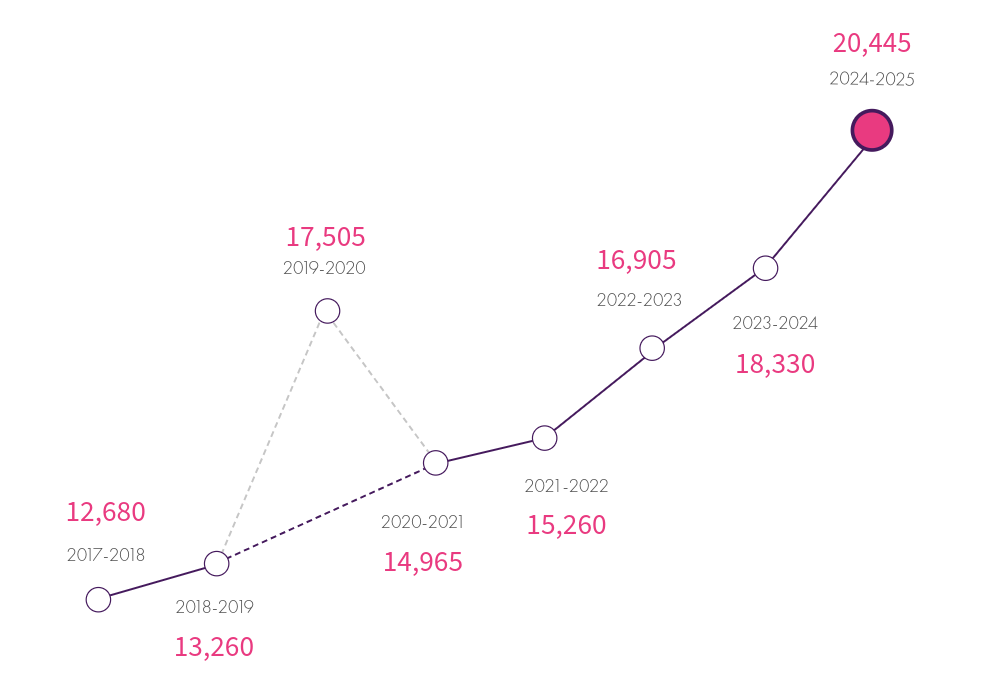 Number of unique learners per academic year Number of unique learners per academic year |
Data Period Publication Date  |
Number of unique learners
The number of unique learners counts every learner only once, regardless of the number of courses they have completed during the year.
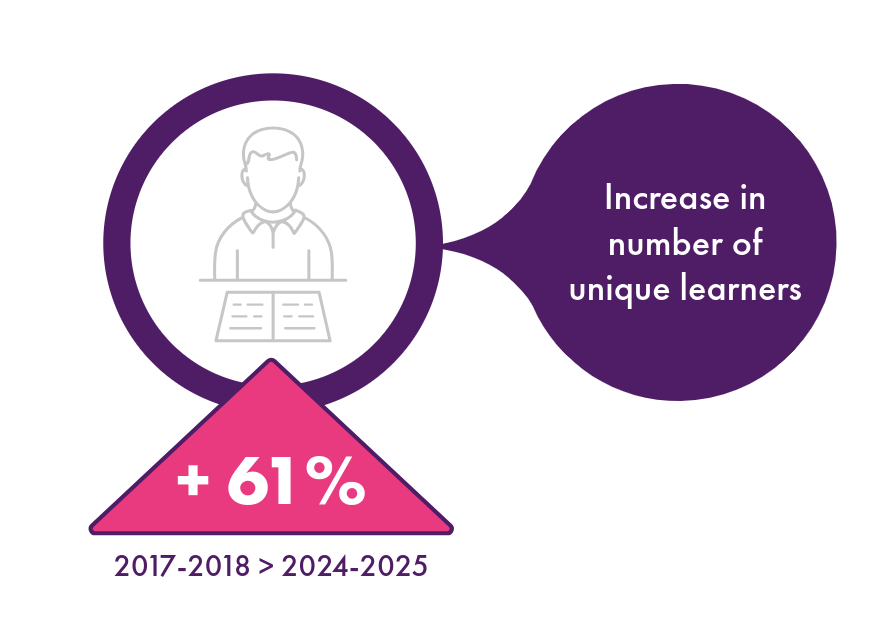
A 61% increase in the number of unique learners compared with 2017–2018 |
|
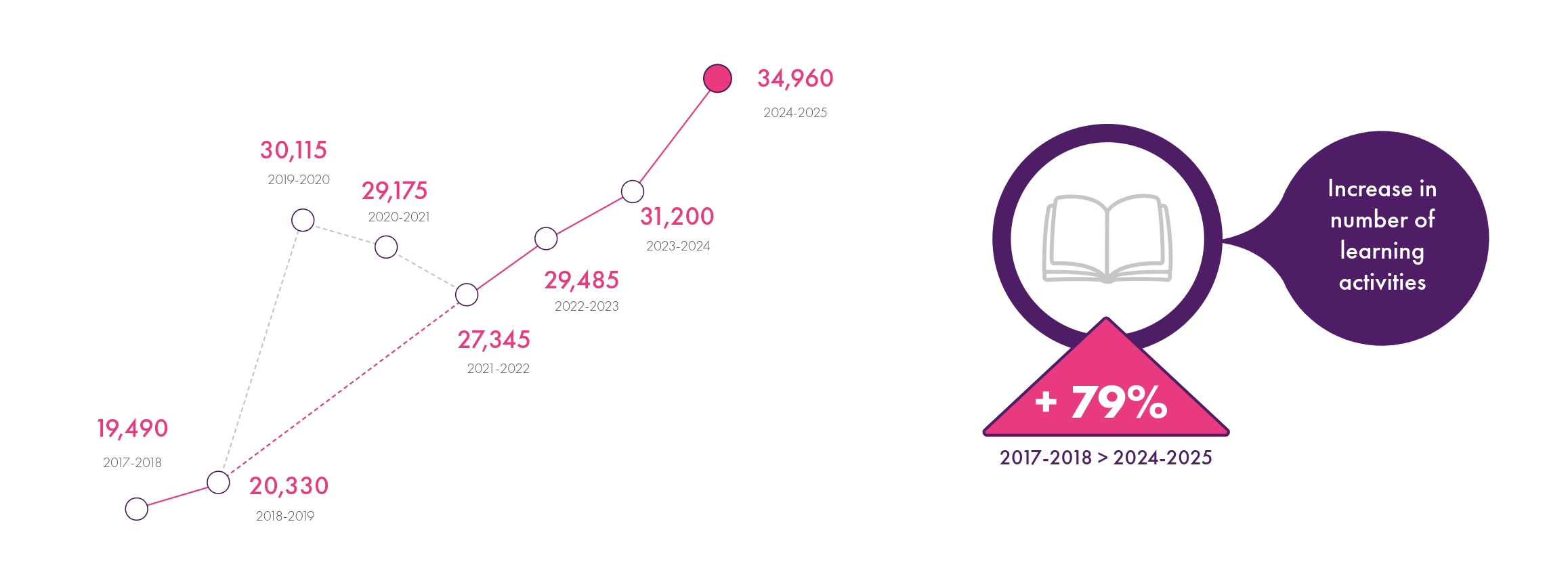
Number of learning activities
Learners can complete more than one learning activity at different levels or intensities during the year. For example, an individual learner may attend a 170–259 hour course at Entry level as well as an ‘hourly’ course at Foundation level during the period. This is counted as two learning activities.
Learners in 2024-2025 completed 34,960 learning activities, an increase of 12% compared with 2023-2024.
There were 79% more learning activities in 2024-2025 compared with the figures in the first publication in 2017-2018.
Learners take advantage of opportunities to intensify their learning by attending a range of activities available to them.
Work Streams
The Centre’s activities have extended over the years, and by 2024-2025 the National Centre’s range of activities is broad, offering different programmes to a range of audiences. This is the first year the National Centre has published data on its various work streams.
2024-2025: Percentage of learners by Work Stream | In 2024-2025 there were:
|
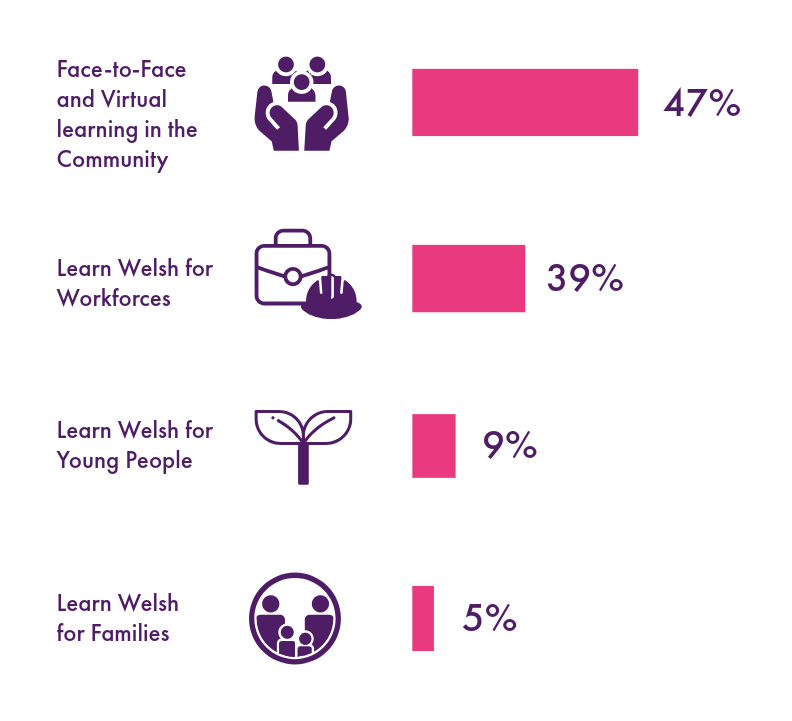
Learners who complete their learning through face-to-face and virtual activity in the community include young people, people in employment and parents/carers.
Learning Levels
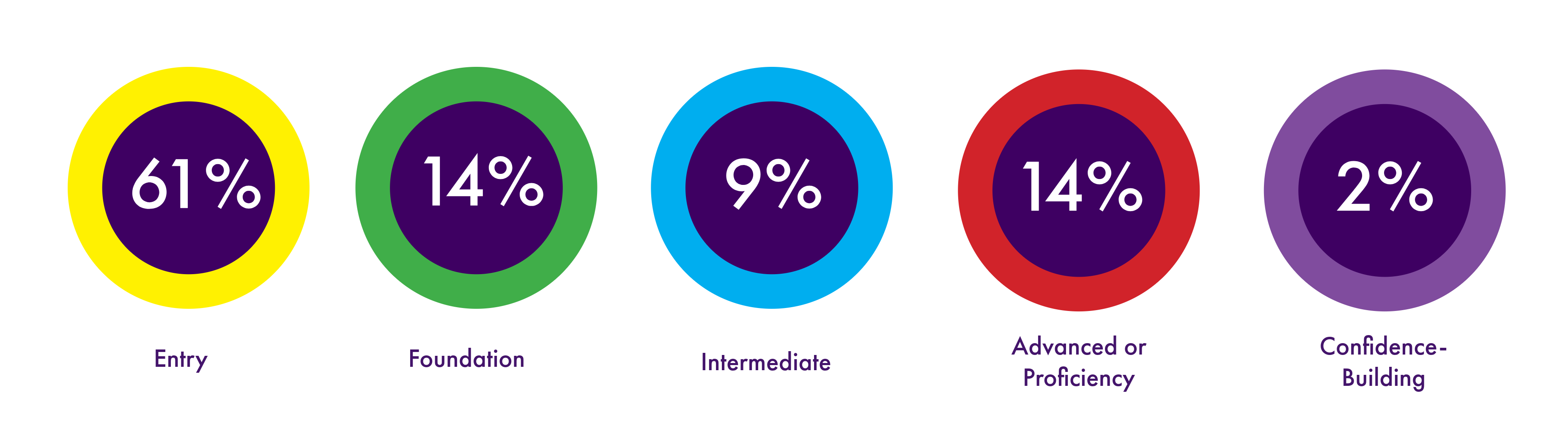
Learning opportunities within the Learn Welsh programme are offered along a language continuum following the National Learn Welsh Curriculum. Some courses are recorded as “other”, which include short courses offered at all levels.
Of the learners who are on courses at a specific level in 2024-2025:
61% of learners were at Entry level (which includes Pre-Entry). 14% were at Foundation level, 9% at Intermediate level, and 14% at Advanced and Proficiency levels.
2% have completed courses at Confidence-Building level, a new type of course for Welsh speakers who have lost confidence and want to use more Welsh.
Returning
The aim of the National Centre is to create new Welsh speakers who enjoy using the language.
Each learner’s learning journey is unique, and everyone who follows Learn Welsh courses is encouraged to use the Welsh they have. Writing, reading, speaking and listening skills are part of every level in the Learn Welsh curriculum.
Learners are encouraged to continue their language journey seamlessly along the continuum, but some learners choose to follow only a specific level, or choose to learn and move through the levels over an extended period, taking breaks from time to time.
In 2024-2025 data is published for the first time showing the number of learners who have chosen to return to continue their language journey.
2024-2025: 62% of learners returned to follow Learn Welsh courses |
|
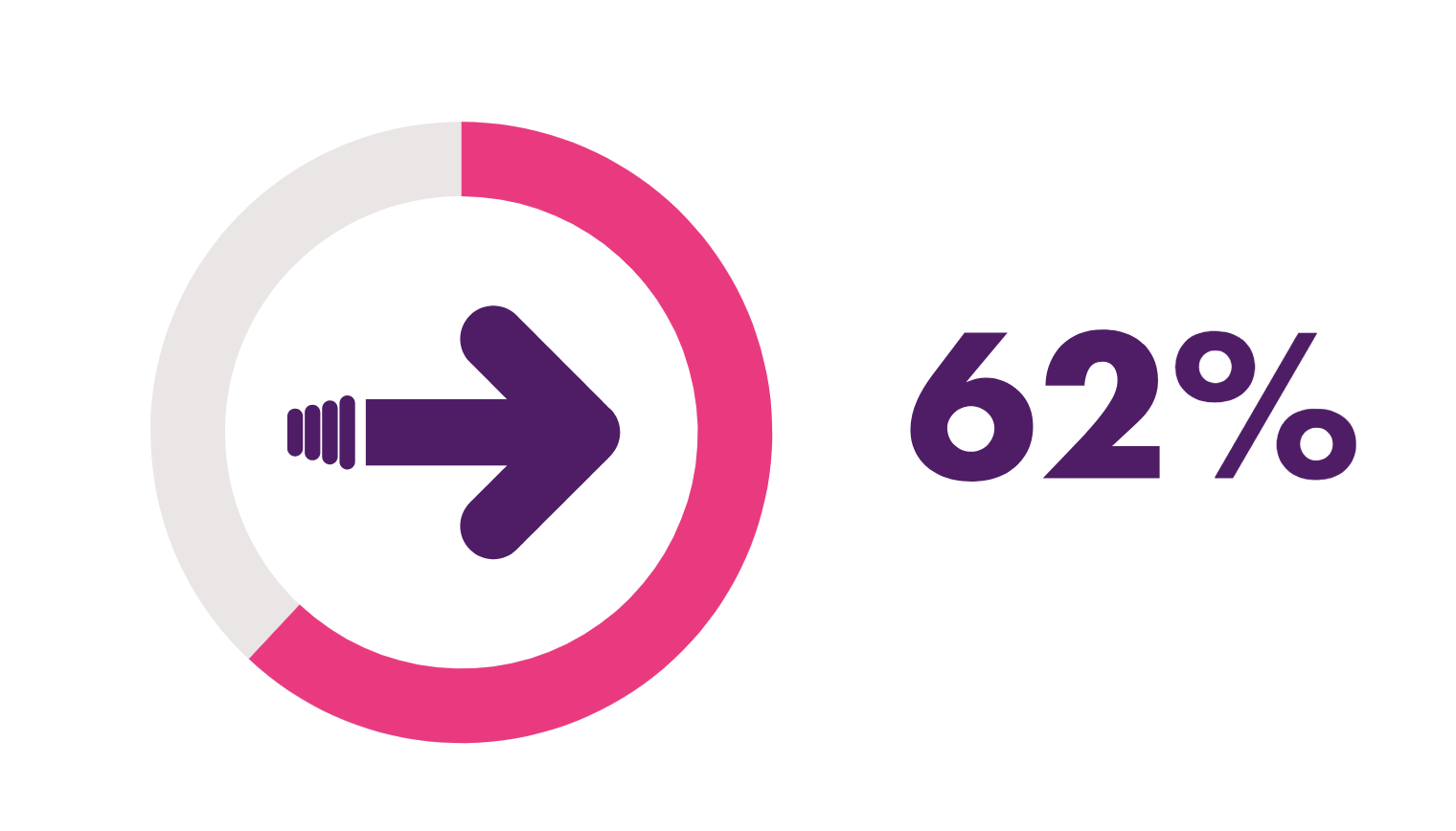
Residential/Block courses and per-hour courses have been excluded from the returner figures because of the different nature of these courses.
Age of Learners
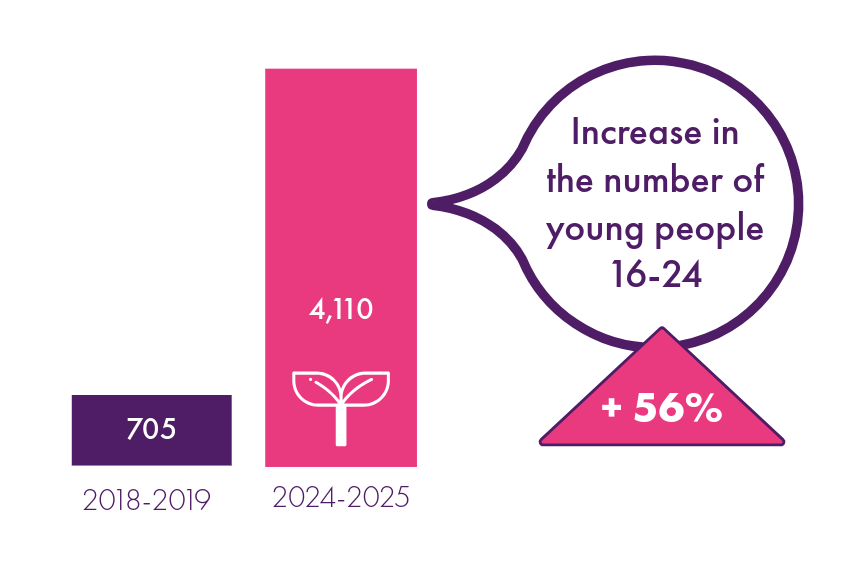
The age of learners is calculated from the first day of the academic year. For 2024-2025, the age of the learner is calculated from 1 August 2024. The learner is responsible for presenting their date of birth.
2024-2025: 56% increase in young learners compared to 2023-2024 |
|
Learning Method
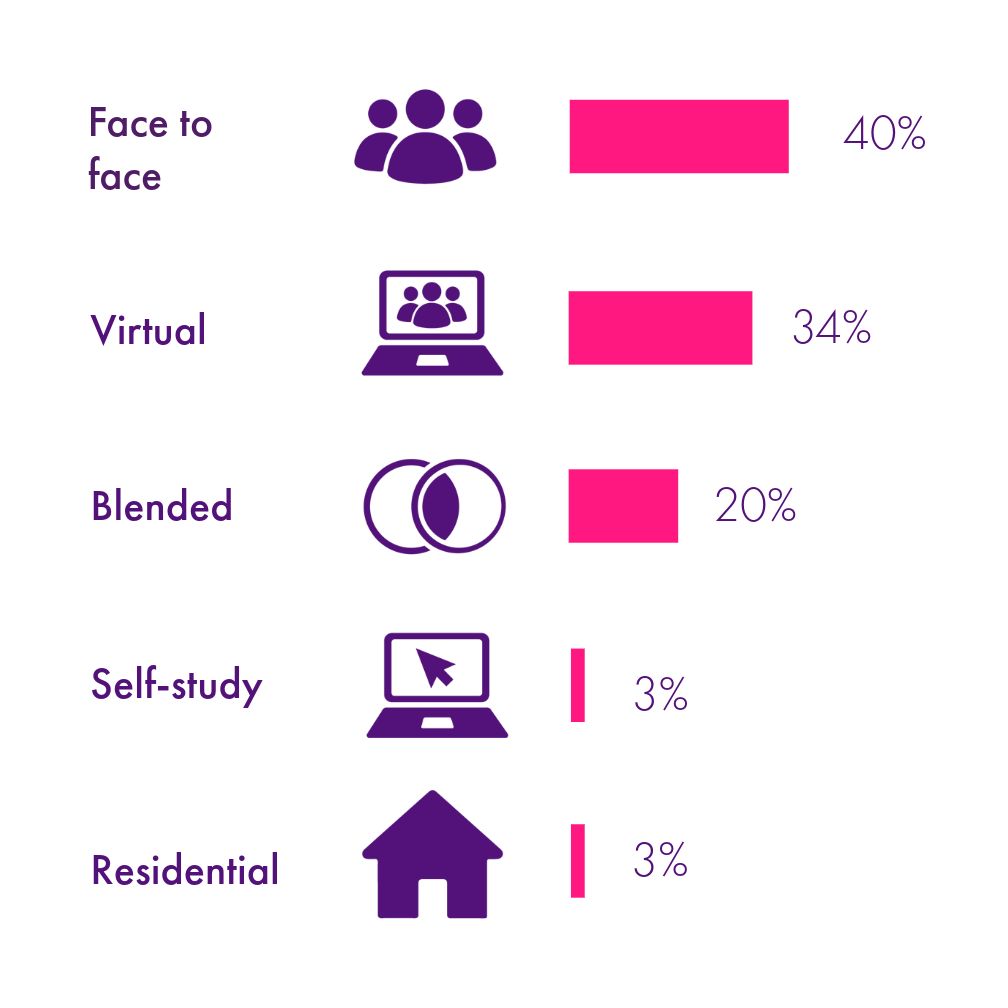
The Centre takes pride in the wide-ranging learning methods available to learners, including face-to-face, virtual, blended (virtual and face-to-face) and self-study methods.
2024-2025: Unique learners by learning method | In 2024-2025, the breakdown of learners was:
|
Ethnicity
There is an option for learners to note their ethnicity. The field is not mandatory, and it is possible to choose 'refuse to provide information' or leave it blank.
In 2024-2025, 73% of unique learners entered information about their ethnicity.
5% of these learners recorded diverse ethnicities, which is an increase of 1% compared with data from 2023-2024.
95% recorded their ethnicity as white.