Dr Mair Lenny Turner's reflections on the IATEFL Conference
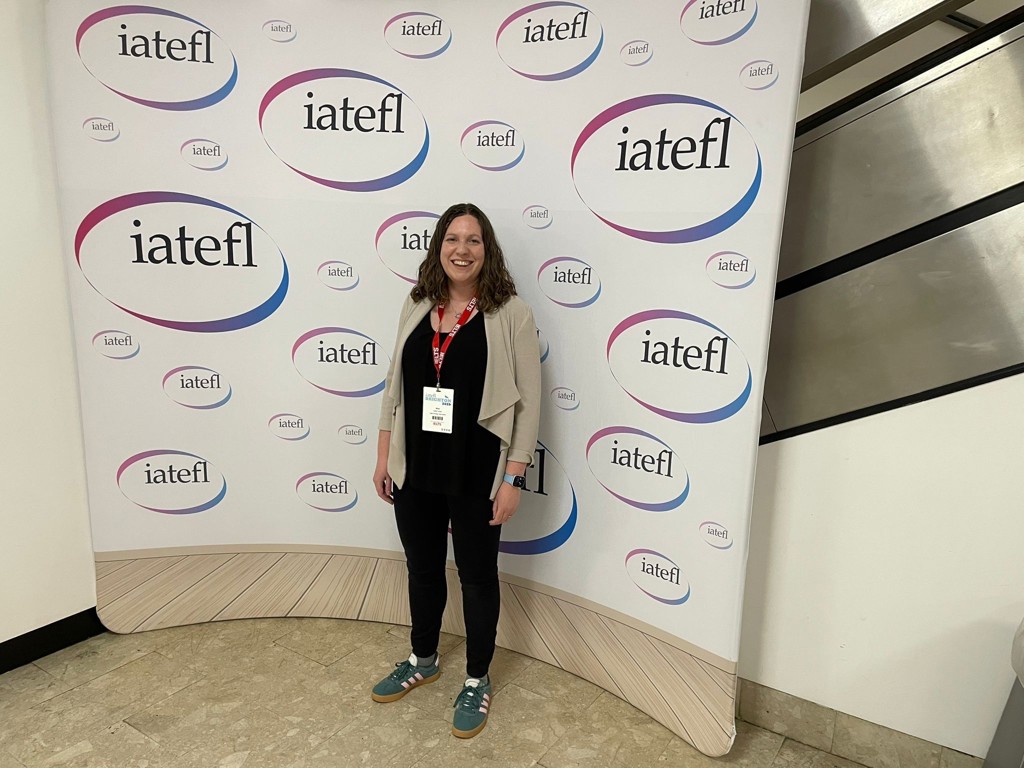
Presenting at an international conference for the first time is one of those experiences that stays with you long after it’s over. On 23 April, my colleague, Helen Prosser, Director of Teaching and Learning at the National Centre for Learning Welsh, and I had the opportunity to present at the IATEFL Conference in Brighton.
For anyone in the language education world, IATEFL is a truly unique experience. Thousands of educators, researchers, material writers, and practitioners from across the globe come together to share ideas, challenge assumptions, and explore the future of language learning. I’ve been a delegate at the conference before, and every time I’m struck by the sheer scale of it – multiple sessions running simultaneously, conversations happening in every corner, and a pure sense of curiosity and openness to new ideas.
This year’s themes reflected some of the biggest shifts in the field: the growing role of digital learning, the impact of inclusive and learning-centred design, the interrogation of AI tools, and the ongoing question of how to make language education more accessible and meaningful to adult learners. There were also many workshops and talks focused on teaching techniques and pedagogy, highlighting how educators can develop engaging, multimodal learning resources that resonate with younger generations while supporting diverse learning styles. Many of these themes resonate strongly with my own work, in the Learn Welsh for adults sector.
Our presentation focused on the design of learning materials – both course books and our digital platform. We kicked off with a five-minute Welsh taster session, and the atmosphere shifted – an interactive conversation rather than a performance. The questions and feedback that followed were thoughtful and encouraging, and it was particularly rewarding to see genuine interest in the Welsh language among an international audience.
We focused on selected elements of our A1 to B2 level course materials, as well as the methodology and pedagogical theory underpinning them. My main contribution was to give a whistle-stop tour of our digital resources – the key part of the discussion was how digital tools are not just an add-on, but an integral part of the learning ecosystem, supporting practice, accessibility, and learner autonomy beyond the classroom.
Presenting at IATEFL for the first time strengthened my sense of connection with language teachers from around the world. Although we work across different languages, contexts, and countries, many of us are facing similar challenges: how to design materials and truly support learners, how to use technology meaningfully, and how to sustain learner motivation over time. Sharing our approaches and hearing others’ views felt both grounding and energising.
I left Brighton with new ideas and new questions, and with a sense of accomplishment. I would absolutely encourage anyone considering it to take that step and submit a proposal to IATEFL - Birmingham 2027. It’s worth it!